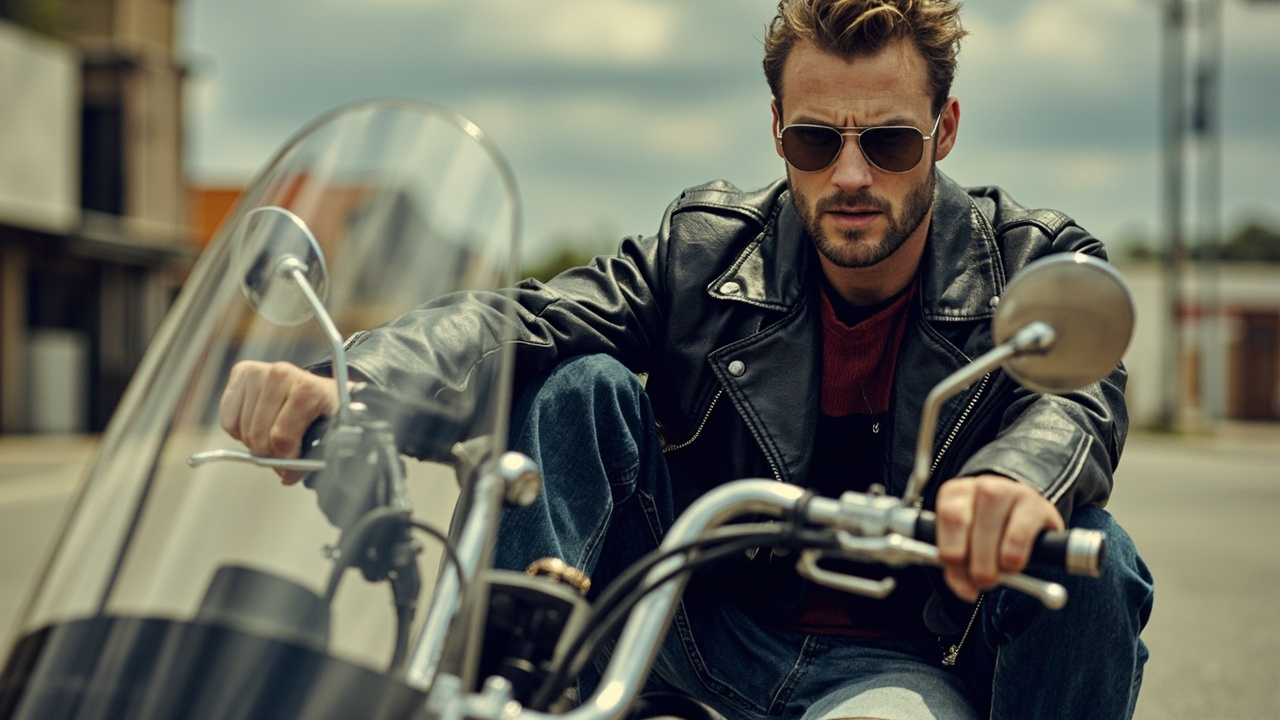
Motorcycle Fashion
Motorcycle fashion is one of the most visually recognizable areas of motorcycle culture. From leather jackets of the 1920s to today's carbon-fiber protective gear, the evolution of motorcycle fashion reflects more than a century of ongoing exploration into protection and aesthetic expression.
The origins of motorcycle fashion are closely connected with the development of motorcycle sport. Riders in the 1920s usually wore heavy leather jackets and tall boots. The original purpose of these clothes was wind protection and warmth rather than safety protection. In the 1930s, racers began wearing dedicated motorcycle clothing, including one-piece leather suits and seamless gloves. These designs became the prototype of later motorcycle safety equipment.
Cafe Racer culture in the 1950s introduced new aesthetic elements into motorcycle fashion. Riders of this period wore slim leather jackets, narrow jeans, and black boots, a style known as the "rocker look." Helmets were still optional equipment at this time, and many riders preferred aviator-style leather helmets rather than standard safety helmets.
In the 1970s, as motorcycle sport became more professional, safety equipment standards also became stricter. The emergence of high-performance materials such as carbon fiber and Kevlar significantly improved the protective capability of safety equipment. Japanese helmet brands such as Arai and Shoei began emerging in international markets, offering lighter yet safer products.
Racing clothing in the 1980s adopted bolder colors and graphics. Honda's Repsol colors and Yamaha's blue-and-white livery became among the world's best-known motorcycle graphics, and these color schemes also appeared on leisure riders' equipment. At the same time, streetwear brands began collaborating with motorcycle brands, and fashion labels such as Off-White and Supreme have released co-branded motorcycle helmets or jackets.
In the 1990s, motorcycle fashion began splitting into several different style directions. The first was professional racing style, using the same high-tech materials and avant-garde designs as MotoGP riders. The second was classic retro style, imitating the clothing of motorcycle riders from the 1960s to the 1970s. The third was function-oriented Touring style, emphasizing waterproofing, ventilation, and comfort for long-distance riding.
In the 2000s, the market for women's motorcycle fashion began receiving attention. In the past, motorcycle gear usually came only in men's sizes, and women riders often had to wear ill-fitting clothing. This problem gradually improved as more brands launched women-specific lines. Brands such as alpinestars, Dainese, and Rev'it now offer complete women's product lines including helmets, protectors, and riding apparel.
Safety equipment technology continues to advance. Today's high-end helmets use carbon fiber or fiberglass composite shells, with liners made from multi-density foam to absorb impact energy at different frequencies. Patented technologies such as MIPS (Multi-directional Impact Protection System) and SES (Safety Energy Management System) further improve helmet protection during oblique impacts.
Riding glove design has also become increasingly specialized. Full-finger road gloves are equipped with carbon-fiber knuckle guards and sliders, balancing control feel with protection. Off-road gloves use reinforced palm pads and open knuckle designs to allow fine control when operating off-road motorcycles.
Motorcycle boots have likewise evolved from simple to complex. Modern motorcycle boots use a dual-layer structure with built-in steel plates and external plastic protectors, dispersing force during impact. Waterproof and breathable membranes such as Gore-Tex allow riders to keep their feet dry in various weather conditions.
In addition to functional equipment, motorcycle fashion also includes non-functional style items. Leather jackets, motorcycle T-shirts, and accessories printed with motorcycle graphics have become symbols of motorcycle culture, and are also a way for many non-riders to express identification with this culture.
Social media has had a major influence on the development of motorcycle fashion. Platforms such as Instagram allow enthusiasts to share their outfits and styling, and have also given rise to the new promotional model of "influencer marketing." Some rider bloggers with large followings collaborate with gear brands to launch co-branded product lines.