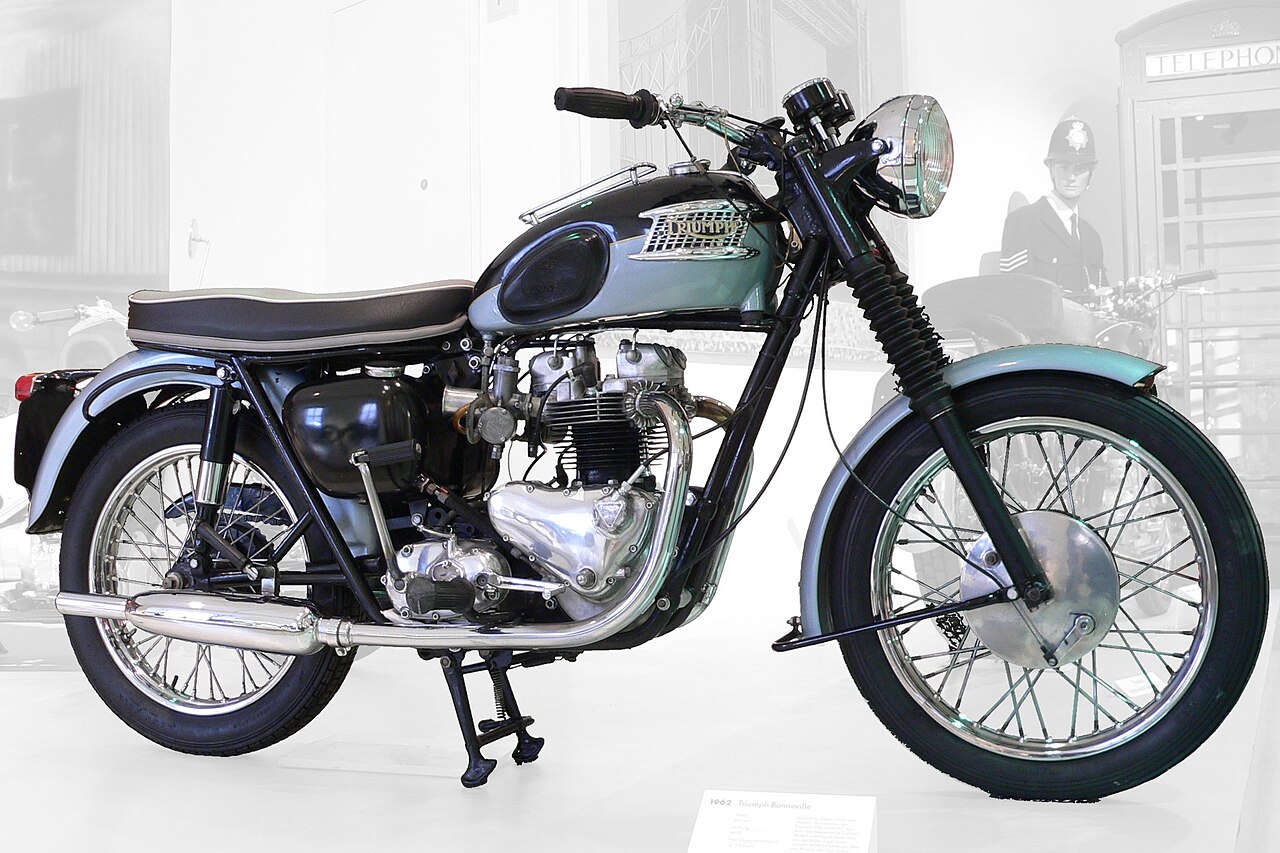
Triumph Bonneville (1959) — The Definitive British Classic
The Triumph Bonneville, introduced in 1959, became the most iconic British motorcycle of its era. Named after the Utah salt flats where Triumph set speed records, it represented the pinnacle of British engineering.
Historical Significance
The Bonneville powered Steve McQueen to victory in "The Great Escape" and was the motorcycle of choice for British racing. It established the template for parallel-twin engines that influenced manufacturers worldwide.
Triumph's Meriden factory became synonymous with British motorcycling heritage, and the Bonneville name continues today under modern ownership.
Technical Highlights
Parallel-Twin Engine
The 649cc parallel-twin featured:
- OHV (overhead valve) design with pushrods
- Air cooling with detailed fins on cylinders and head
- 9:1 compression ratio for performance
- Two Amal Concentric carburetors (later models)
Construction
The unit construction engine/transmission design provided rigidity while simplifying maintenance.
Cycle Parts
The tubular steel frame with Earles-type front fork (on later models) provided stable handling. The rear suspension used swinging arm with spring units.
Visual Character
The Bonneville features:
- Polished alloy engine cases visible through side panels
- Large 19-inch front wheel with deep-section rim
- Lucas taillight integrated into rear fender
- Speedway-style seat with chrome beading
Classic color: Silver with red accents (as raced), or Black with gold coach lines.
Source: Wikipedia - Triumph Bonneville